Work

See the bench — illustrative engagements

These anonymised stories reflect the kind of embedded-systems and real-time control work RoboCircuit delivers for Canadian manufacturers, warehouses and logistics scale-ups. Names and logos are withheld; metrics are past and illustrative — not promises for your environment.

A Quebec manufacturer's torque loop at shift change

Context: A mid-size manufacturer near Trois-Rivières ran a cobot arm for palletizing. The control loop performed cleanly during day-shift bench tests. Within two weeks of floor deployment, operators reported oscillation during the 14:00 shift change — precisely when dock doors opened and forklift traffic increased.

Approach: RoboCircuit traced the hunting to a shared ground path that introduced low-frequency noise into the torque sensor feed. We rerouted shielding, retuned the control policy with deterministic timing checks and rebuilt the actuator driver integration layer. Computer vision-based collision checks stayed in the loop; autonomous grasping never ran without human-in-the-loop supervision during the four-week pilot.

Outcome: Oscillation dropped below operator-noticeable thresholds in supervised runs. A functional safety review documented remaining edge cases and CSA-aligned guarding recommendations. The client retained us for quarterly control-loop audits — not because the system was "done," but because floors change.
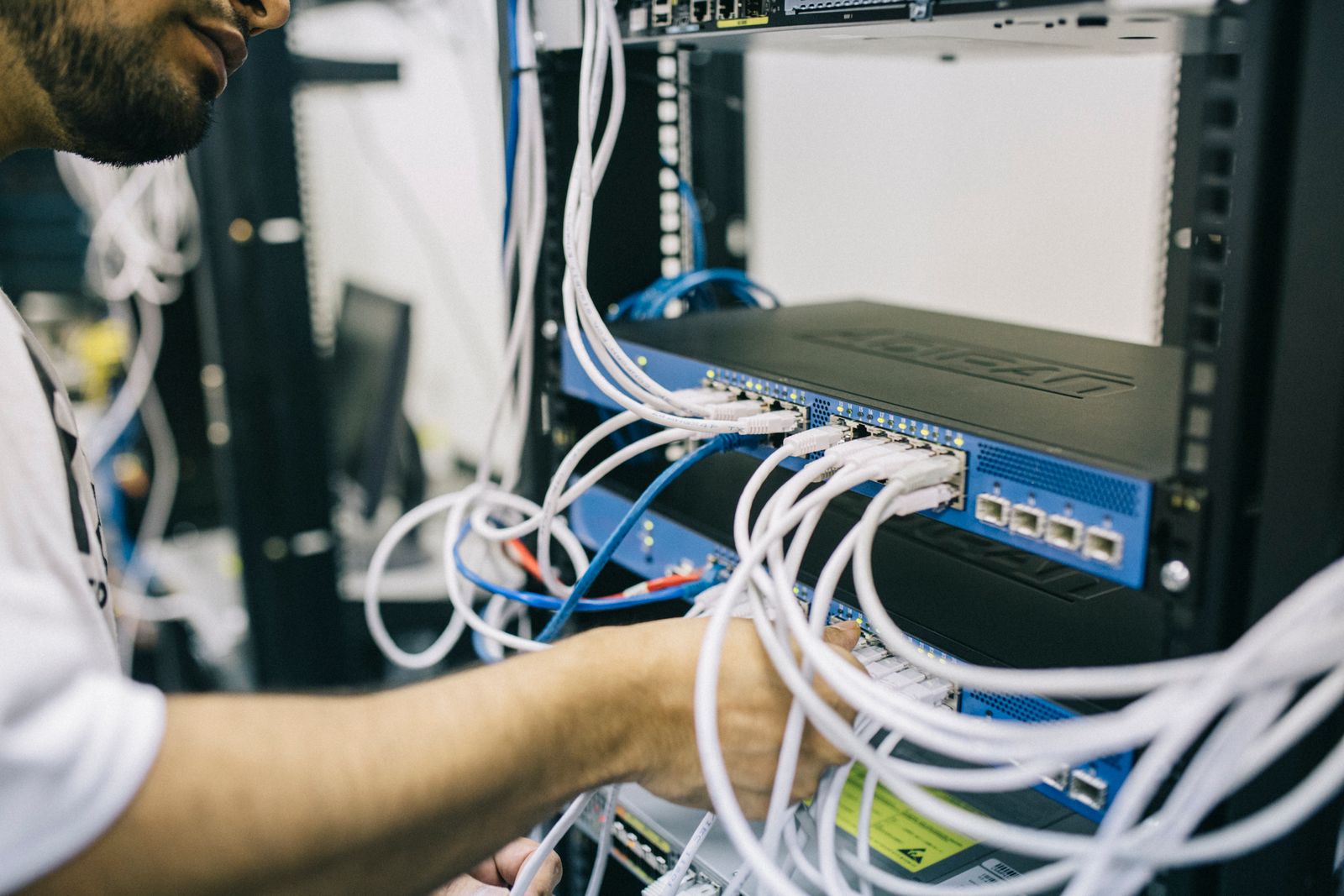
Client hardware bring-up session on robotics engineering bench
Real-time control loop testing with telemetry monitoring

A Montreal logistics pilot's edge model under motion

Context: A logistics scale-up in Montreal's South Shore piloted an AMR with on-board edge inference for obstacle avoidance. Bench tests showed acceptable inference latency. On the warehouse floor, the model throttled within minutes of continuous motion — frame drops followed, then path planning hesitations.

Approach: Thermal profiling revealed the compute module exceeded its sustained TDP once the drive motors heated the enclosure. We relocated edge inference to a better-ventilated mount, reduced model precision with validated accuracy bounds and added a telemetry dashboard for fleet orchestration operators to watch channel health. Simulation replay confirmed the sim-to-real gap was thermal, not algorithmic.

Outcome: Inference latency stabilized under motion in supervised pilot runs. The client did not proceed to unsupervised autonomous navigation — human oversight and teleoperation fallbacks remained mandatory per our risk assessment. Illustrative pilot cost landed near C$72,000 over twelve weeks.

An AMR stack missing real-time deadlines until cable routing changed

Context: An industrial automation integrator brought us a mobile robot stack where ROS 2 nodes intermittently missed deadlines. Logs pointed to perception pipeline jitter, but the root cause was not the algorithm — a USB3 vision cable ran parallel to a motor power line for nearly two metres inside the chassis.

Approach: We rerouted cables, separated power and signal paths, revalidated sensor fusion timestamps and profiled end-to-end latency across SLAM, obstacle avoidance and motion planning nodes. A digital twin replay helped confirm timing recovery before floor re-tests. Deployment supervision covered the first seventy-two hours of live operation with engineers on call.

Outcome: Deadline misses dropped from intermittent to rare in telemetry review over a six-week observation window. The integrator adopted our cable-routing checklist for future AMR builds. No throughput or uptime guarantees were made or implied.

A cobot calibration drift across temperature swings

Context: A food-processing client near Laval saw grasping accuracy degrade between cold-storage ingress and ambient packing zones. Proprioceptive calibration that held on the bench drifted as temperature changed — a classic embedded-systems problem hiding inside a "perception" ticket.

Approach: RoboCircuit implemented zone-aware recalibration triggers, validated manipulation policies under temperature ramps and documented human-in-the-loop verification steps for operators. Functional safety review covered pinch points and ISO 10218-aligned stopping distances with the client's safety engineer — we support, not replace, site safety authority.

Outcome: Grasp success in supervised runs improved across temperature transitions. The client continues seasonal re-verification rather than assuming set-and-forget operation — honest robotics engineering for a safety-critical environment.

Disclaimer: All engagements described are anonymised or composite illustrations. Metrics and costs reflect past project shapes, not guarantees. Robotic systems are safety-critical; outcomes depend on your hardware, environment and integration. Human oversight and site-specific risk assessment remain required.